
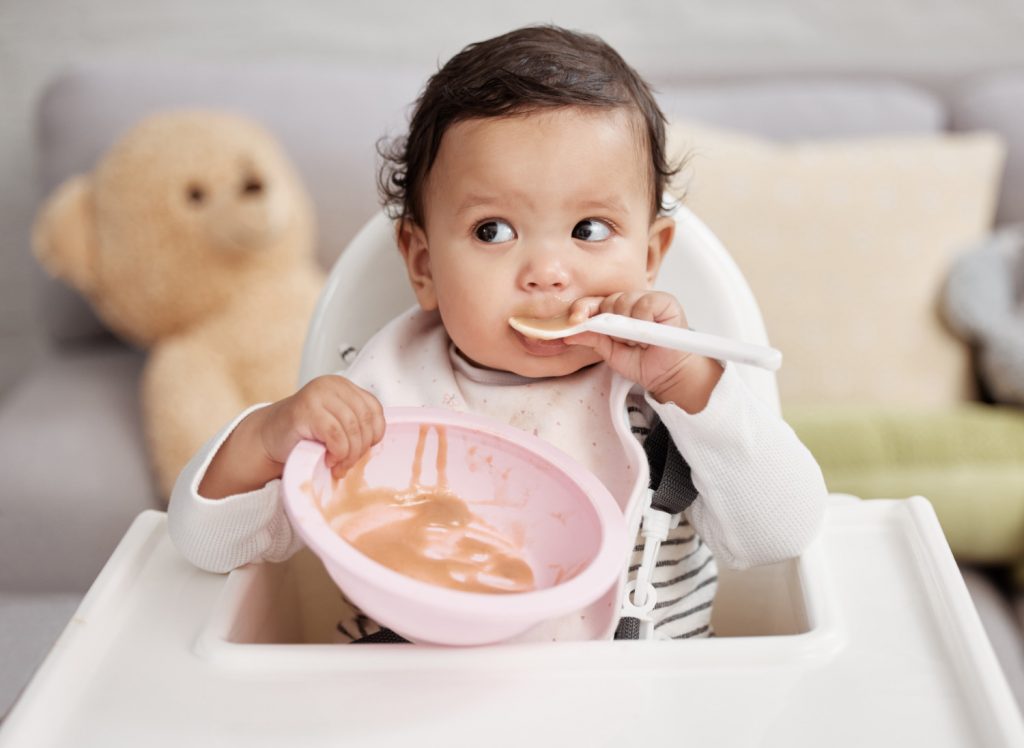
On the one hand, all babies are interested in new experiences, but on the other hand they show “wary of new things” (so-called neophobia). This can also be noticed when babies explore new tastes or consistencies of food (e.g. porridge). It is completely normal behavior for babies to grimace when eating a new food and possibly spit it out again at first. Every baby is unique: some babies accept new foods quickly, while others need to be introduced to new foods and tastes repeatedly and very sensitively.
Parents often have a good sense of when their child is ready for new food. Perhaps you can encourage your child with a positive, friendly facial expression and tender, reassuring words if they are initially confused by the new taste or texture. You may also unconsciously open and close your own mouth to encourage your child to imitate you in the feeding situation. You instinctively adapt your voice, way of speaking, facial expressions and body language to your child’s current needs, mood and stage of development. These automatic, reflexive behaviors are known as “intuitive parenting skills”, which are anchored in evolutionary biology. They help you to take care of your child in all areas of everyday life.