The first few years of your child’s life are characterized by a rapid pace of development. As parents, you support your child in taking numerous developmental steps and getting to know their environment better and better. There are so many new things for your child to discover – including learning about hunger and satiety and trying different new foods.
The diet of babies and toddlers changes considerably in the first two years of life: from exclusively drinking breastmilk/formula to solid foods and shared meals at the family table. Milk-based foods are initially supplemented with purée, then gradually replaced by coarser food.
This requires several developmental steps, including motor (e.g. coordination of sucking and swallowing, chewing; holding and using cutlery) and sensory (e.g. accepting new tastes and textures) learning processes. Your child also needs to practice the regulation of hunger and satiety and the ability to remain calm, satisfied and focused on food in the feeding/eating situation. Last but not least, you and your own behavior are the model for your child – you will notice how closely he or she will observe and imitate you when eating.
The importance of feeding
Feeding and eating situations have a deeper meaning for you and your child than the mere purpose of nutrition. They can be important moments of togetherness and mutual exchange: From the beginning, your baby experiences closeness and affection, especially through close physical contact with you. This contact is particularly intense during breastfeeding or when you hold your baby in your arms during bottle feeding. It conveys a sense of security and helps both of you to become more familiar with each other. The distance between your breast and your baby’s face is also the distance at which newborns can see sharply.
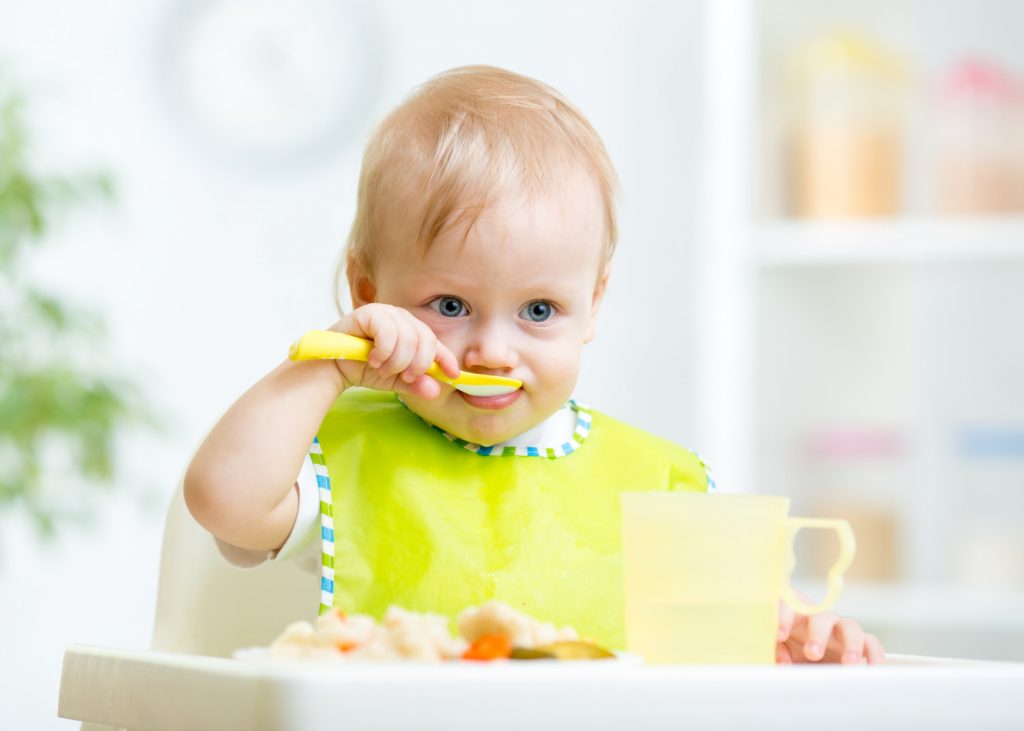
When your child starts to eat porridge and eventually sits with you at the family table for meals, your child will learn that meals are an opportunity for the family to spend time together, that they are fun and that eating is not a minor matter.